Ever notice how the smallest stuff in a kitchen ends up mattering the most?
Hardware placement is a perfect example. Sure, it seems minor at first glance—but move it an inch and suddenly the whole room feels different. Get it right, and your cabinets aren't just easy to use—they tie the whole design together visually.
From picking the right cabinet hardware style to understanding how different cabinet styles call for different approaches, there's a bit to think through before you start drilling.
In this guide, our West Palm Beach kitchen design company walks through cabinet hardware placement for doors, drawers, Shaker cabinets, and modern kitchens. So the finished look feels intentional from every angle.
Curated Kitchen Co.
Why Cabinet Hardware Placement Matters
Hardware needs to look good, but it also needs to work—you're grabbing that pull every day for years. Where you place it decides how natural the cabinet feels to open and whether the kitchen looks pulled together or slightly off.
That's the heart of kitchen cabinet hardware placement: consistency. One pull sitting a touch higher won't ruin things, but across a dozen doors and drawers, small mismatches add up fast.
There's no single "right" spot—it depends on cabinet style, door construction, and hardware size. New to the terms? Our guide to custom kitchen cabinet terminology can help.
Where Should Cabinet Hardware Go?
General guidelines exist for cabinet door hardware placement, but ultimately your cabinet style and personal taste will shape the final call.
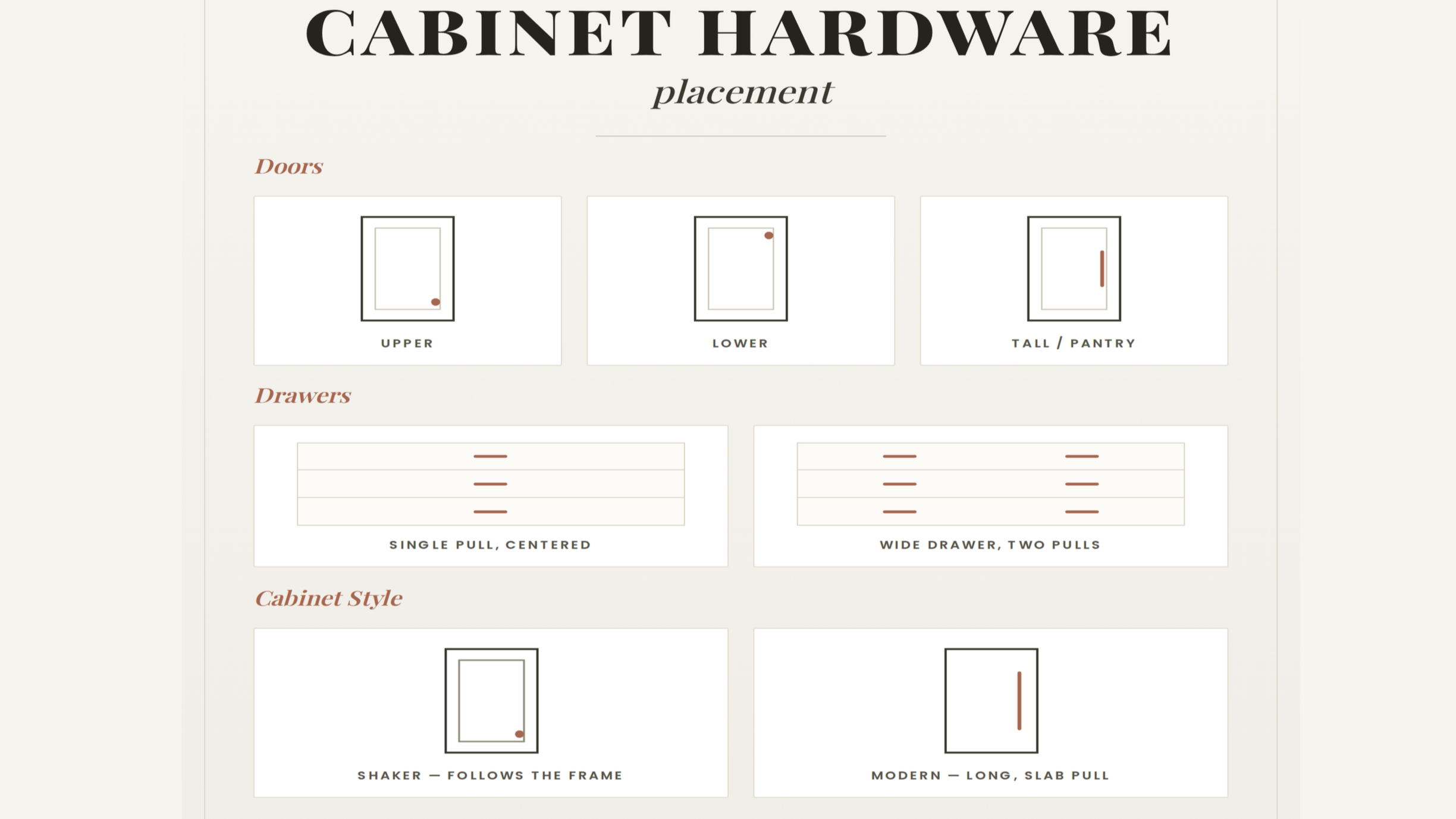
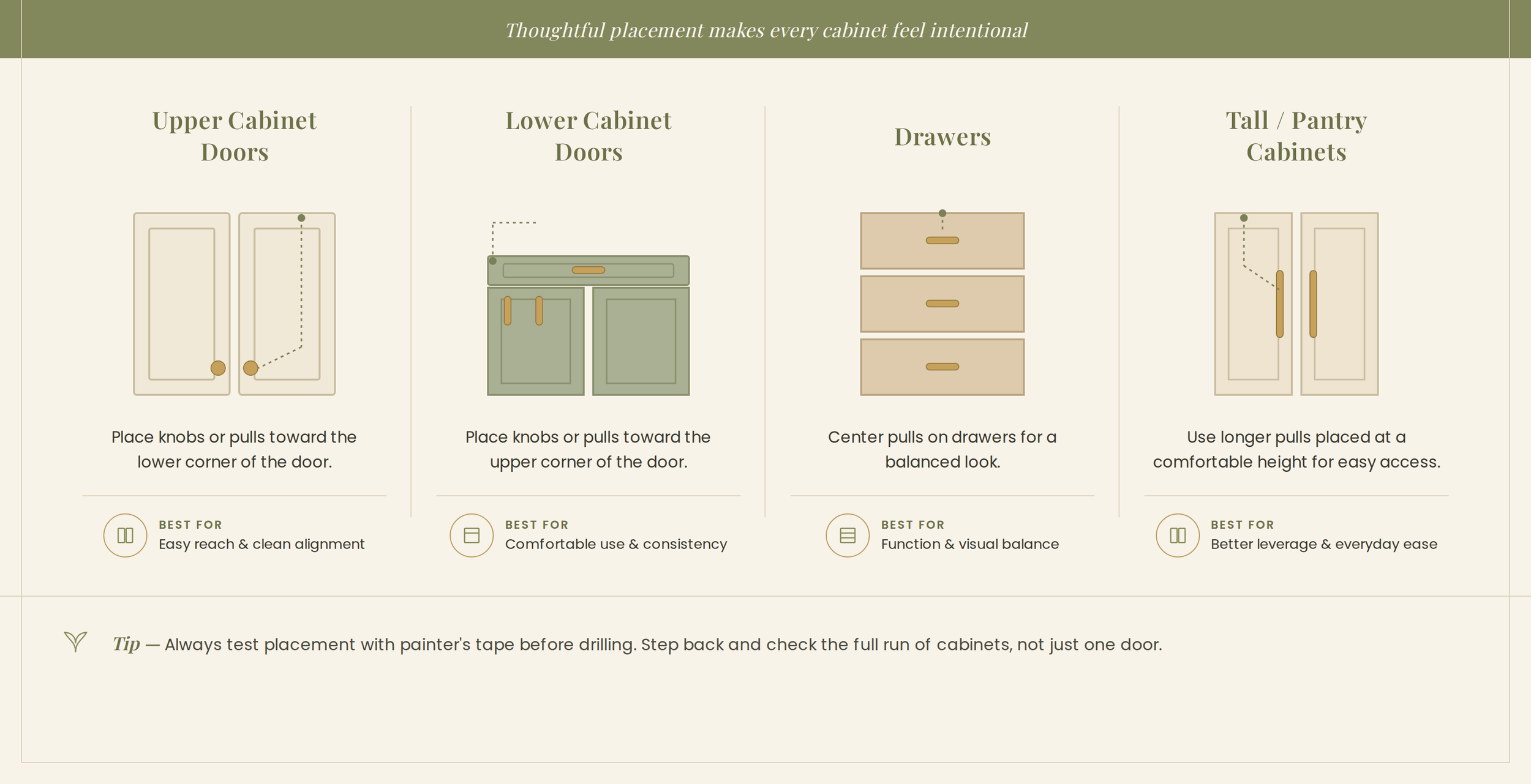
Upper doors: Hardware usually sits near the bottom corner, opposite the hinges—right about where your hand naturally lands anyway.
Lower doors: Hardware goes toward the upper corner, again opposite the hinges, for a comfortable reach.
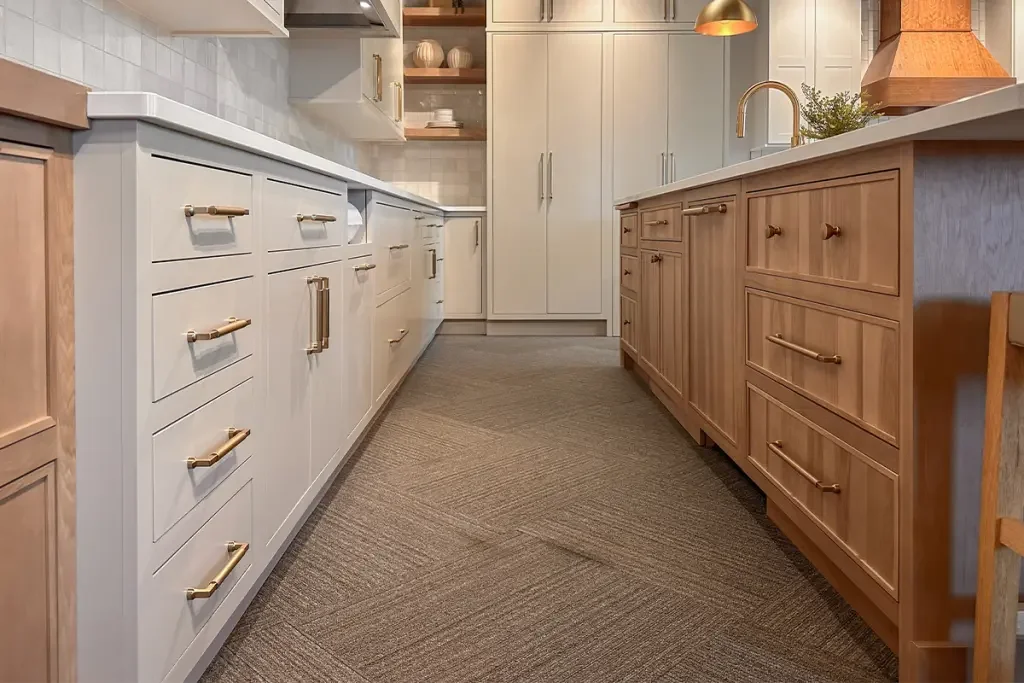
Drawers: Often work best with centered hardware, though wider drawers can handle longer pulls, and extra-wide ones may need two.
Tall and pantry cabinets: These cabinets truly stand out as a unique—bigger doors tend to call for longer hardware, both for grip and for visual balance. Our guide to full-height kitchen cabinets digs into that further.
This cabinet hardware placement guide is just one piece of the puzzle, though. If you're rethinking your layout too, check out our practical kitchen layout ideas.
Curated Kitchen Co.
Shaker cabinet hardware placement
Placing shaker cabinet hardware is somewhat a matter of thought—there are natural lines to work with; why not make use of them? Knobs are usually located at the corner of the door, near it, depending on the shape of the door frame. Pulls tend to be aligned with the rails and stiles.
It's less about hitting a certain mark and more about making the hardware feel like it was always there. It's even more important with slim Shaker doors, as they can get lost in the frame if the door is too small or overpower it if it's too big.
Considering custom cabinetry? Our high-end cabinet hardware guide has more ideas on pairing hardware with different cabinet styles.
Modern Kitchen Cabinet Hardware Placement
Modern kitchens tend to keep modern cabinet hardware placement simple—and that's part of the appeal.
Long, slim pulls emphasize a drawer's horizontal lines, while a vertical pull works well against a tall door. With slab-style cabinetry, there's no panel line to guide you, so alignment matters more than you'd think.
Many homeowners just pick one pull style and use it everywhere. It sounds simple, but it quietly ties the whole kitchen together—clean, intentional, and fuss-free.
Want more ideas? Our guide to sleek kitchen hardware ideas covers how finishes shift a kitchen's feel.
SHOWPLACE CABINETRY
How Hardware Size Affects Placement
A pull that looks great on a small drawer can look a little lost on a wide drawer or tall pantry door. Generally speaking, the bigger the cabinetry, the longer the hardware should be—while smaller doors tend to look better balanced with a knob or pull size to match.
And for wide drawers, two pulls instead of one is usually the better call. It's not just about looks, either—it genuinely makes the drawer easier to open.
This is one reason hardware should be considered alongside the rest of your kitchen design plan, rather than as the very last decision.
A Few Things to Consider Before You Drill
Before making permanent holes, test your preferred position.
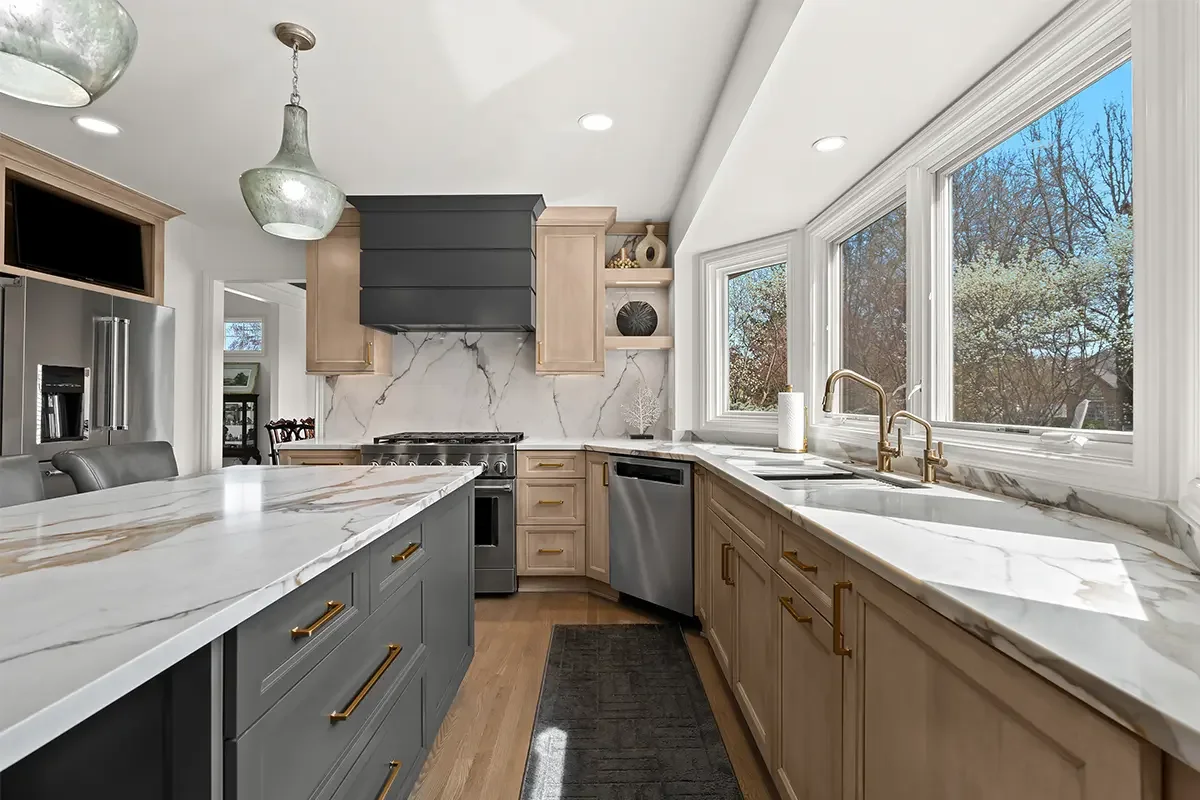
Painter's tape or a temporary hardware template is a great way to test different options before committing. And don't just judge one door on its own—step back and look at the full run of cabinets together.
Then test the hardware from a practical perspective. Is it comfortable to reach? Does the position feel natural? Does it line up with neighboring cabinets?
This becomes especially important when you're tackling a bigger kitchen remodel. Still in the planning stage? Our guide to the key steps in a kitchen remodel can help you work through the process before you get to those finishing decisions.
SHOWPLACE CABINETRY
How Curated Kitchen Co. Brings the Details Together
A kitchen comes together in the details—and at Curated Kitchen Co., that's really where we spend most of our attention. Cabinetry, countertops, lighting, hardware... it all has to work as one. Cabinet hardware placement is a good example of what we mean. It sounds minor, but it's often what decides whether a kitchen feels finished or just put together.
Are you going for classic Shaker doors, or something more contemporary? Either way, getting the hardware right is what pulls it all together. If you're ready to start planning, see us at 421 Northwood Rd., West Palm Beach, FL 33407—or just reach out and we'll talk through your project.
